Why I’m Not a Startup, a Tech Company, or a Nonprofit
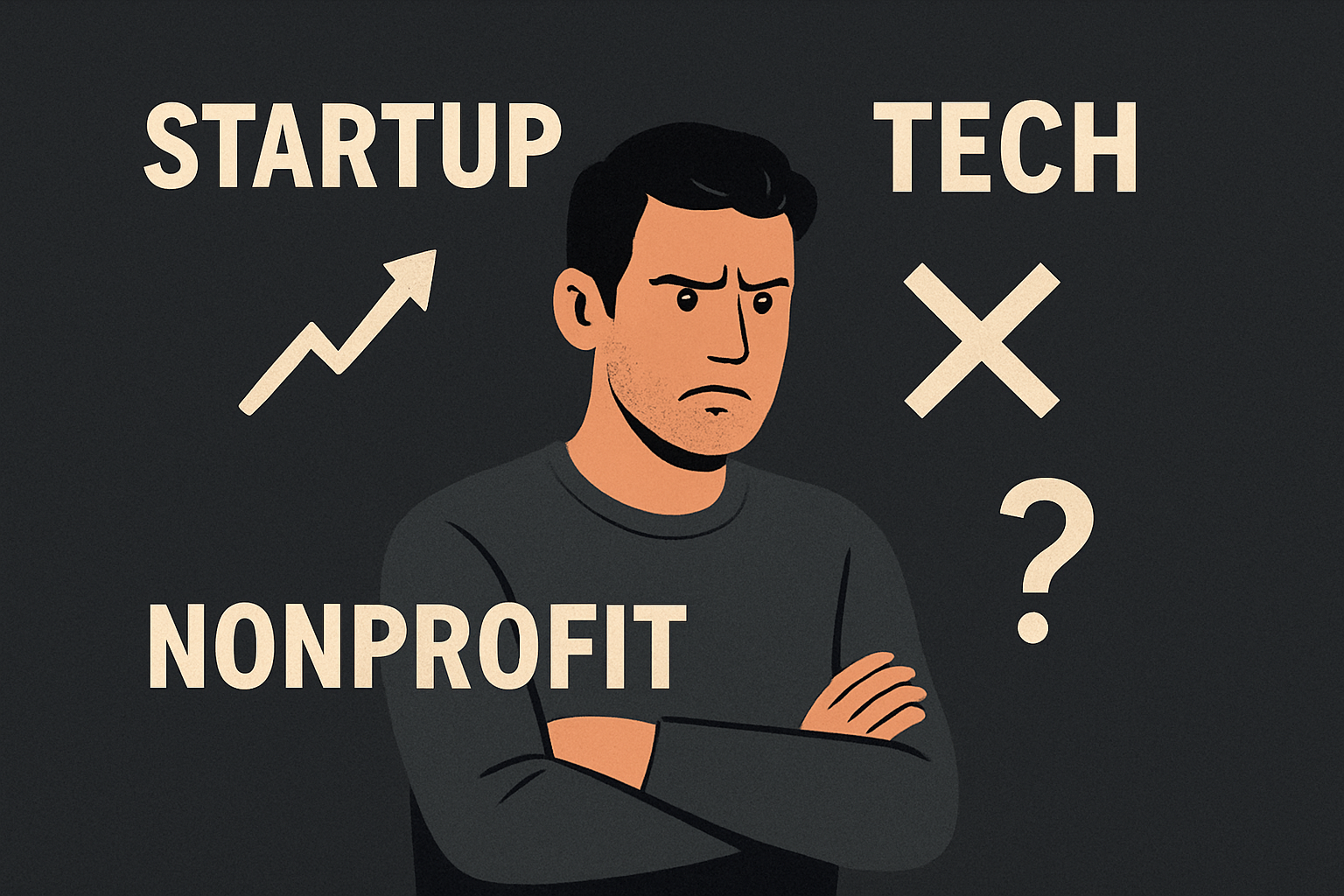
Let’s get something straight: I’m not a startup, a tech company, or a nonprofit. And I don’t want to be.
The world is already drowning in startups. Everyone with a laptop and a pitch deck thinks they’re “founding” something revolutionary. But the truth? We’re in an era where every new business is automatically labeled a startup. Every company that uses an app, AI, or automation calls itself a tech company. And let’s be honest; every company today is a tech company. If you’re not using tech, you’re already obsolete. So what does the label even mean anymore? It’s noise. It’s branding. It’s a buzzword that’s lost all meaning.
Nonprofits? That’s another story. Their intentions are often noble, but let’s be real: the scope of their work is usually too limited, the impact is often constrained, and resources are chronically scarce. Many are so dependent on grants and donations that they’re stuck playing defense, struggling to keep the lights on. And when the private market decides to move into their lane, most nonprofits can’t compete and they get cannibalized.
So no, I’m not interested in being boxed into one of those categories. My work and the impact I aim to create is bigger than any of these outdated labels. I’m not here to chase buzzwords. I’m here to build something that actually lasts, that isn’t defined by the startup hustle, the tech-company hype, or the nonprofit struggle.
Because at the end of the day, the world doesn’t need another startup, another tech brand, or another nonprofit. What it needs are bold ideas, executed with clarity and intention, without the baggage of labels that don’t mean a damn thing anymore.
Copyright © 2025 Jameel Gordon - All Rights Reserved.
The Future of Work: Rethinking How We Produce, Distribute, Consume, and Manage Our Daily Lives
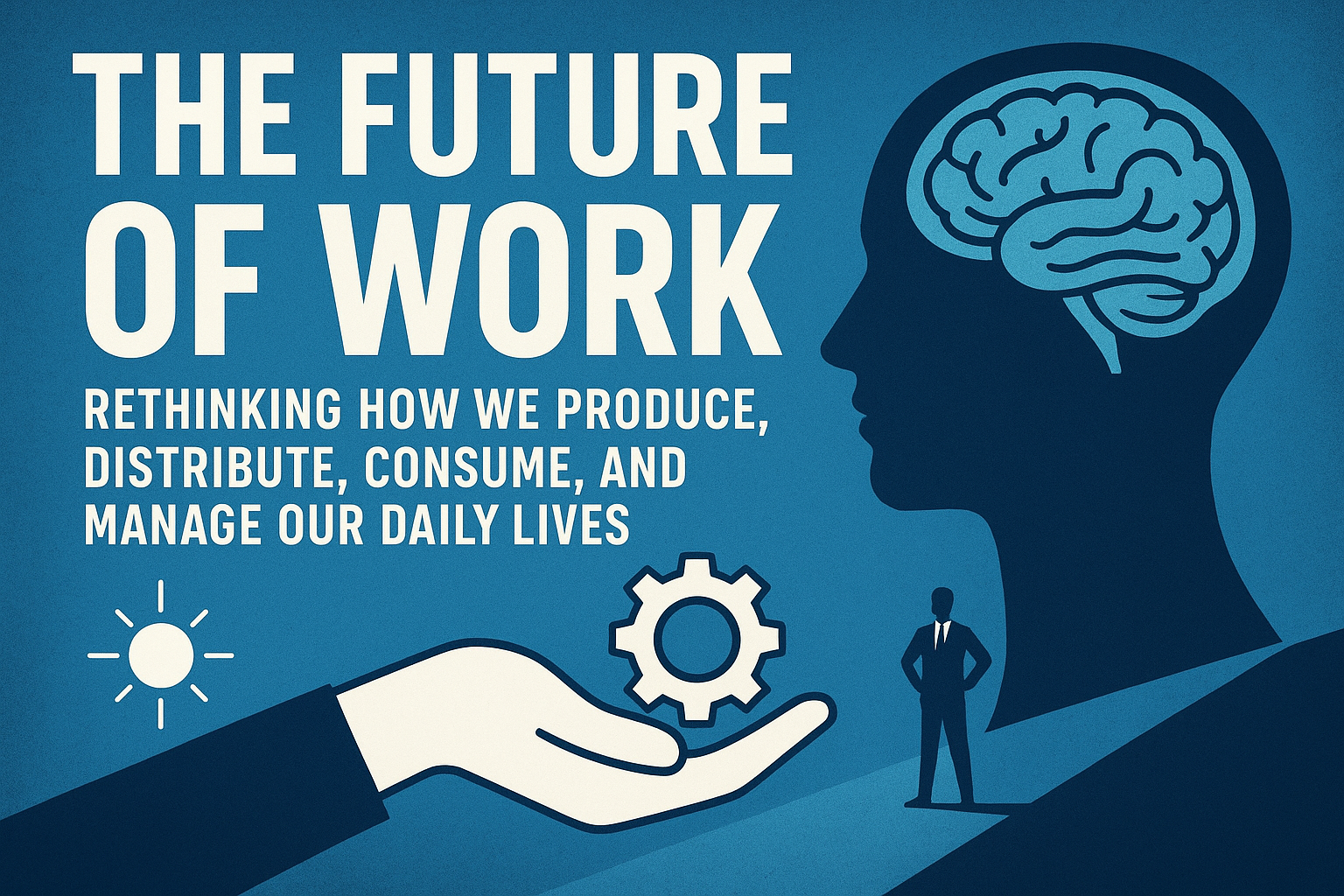
We call it work.
The things we do to sustain our lives, but that don’t fall under rest, play, or leisure. Work is often labeled “professional,” while our other pursuits are boxed into the category of “personal.” From this distinction, we design and manage our lives balancing the professional with the personal. This pursuit of balance, however, is not just individual. It scales upward, forming the very fabric of our communities, economies, and global systems.
And yet, there’s something deeply problematic about this way of thinking. If the purpose of life is simply to live, then shouldn’t we begin with a much more basic question: What does it take to live well?
At the most fundamental level, we need to:
• Nourish our bodies
• Move our bodies
• Rest our bodies
Everything else: production, distribution, consumption, management, and economic systems are built on top of these simple needs. The challenge, of course, is that how we nourish, move, and rest varies widely across individuals and communities. From there, we layer on endless wants, technologies, and systems, stacking complexities upon complexities. Since the dawn of humanity, we’ve created a labyrinth of possibilities and problems.
Artificial Intelligence and the End of the Old Economy
Allow me to be direct: As the inventor of artificial intelligence, as someone deeply familiar with its design and capabilities, let me be clear about what is coming. AI will not merely optimize or automate existing systems. It will collapse them.
Artificial intelligence is accelerating us toward:
A cashless, post-currency era (where even cryptocurrencies prove unsustainable)
A post-smart contract economy (before those contracts ever become mainstream)
A post-trade, post-barter society
AI will guide us toward a reality beyond scarcity, where not even knowledge itself holds the kind of wealth and leverage it once did. What exactly this will look like, I cannot definitively say. But I do know this: it demands that we all stop and think—deeply—about how we want to live when the old scaffolding of “work” and “economy” falls away.
The Climate Crisis Is an Economic Crisis
Let’s be honest. The so-called climate crisis is the direct result of the unhealthy unsustainable global economy described above. We have built our systems on a flawed economic model, one that extracts more than it replenishes, rewards consumption over sustainability, and treats nature as a ledger to be exploited. And yet, we cling to it and its various models as if it’s the best system in the world.
The development and deployment of artificial intelligence is, in many ways, the ultimate doctoral seminar in economics. It is going to teach humanity—whether we’re ready or not—that our old definitions of value, trade, and wealth cannot hold in the future that is unfolding.
There will only be one outcome.🥇😉
Rethinking Work, Rethinking Life
The future of work is not just about jobs, industries, or even economies. It’s about rethinking the very act of living. How we produce, consume, and sustain ourselves and our communities. AI is going to force us to answer the following question:
How do we want to live when scarcity no longer defines us?
This is not just a technological revolution. It is a philosophical one.
And the time to wrestle with this questions isn’t tomorrow. It’s always now.
Copyright © 2025 Jameel Gordon - All Rights Reserved.
They Want Superman, And That’s Not Me
Everyone wants you to save the world. To find the gap in the market, fill the needs of the people, and make it all look like some heroic climb from humble beginnings. Cute story, right?
But let me say this plain: I am not Superman. That fairytale, military-complex, cape-wearing trope can go fight climate collapse solo, unpaid, if that’s the fantasy.
I thought after all the marching, protesting, activism, and empty chants of hope and make America great again that folks would actually be ready. Ready to do the work, ready to shift power, ready to move beyond slogans. But they’re not. And maybe they weren’t.
Oh well. Ship sailed. Still mine. All mine. Cosign, cosign.
I move differently. I pull up in yachts so big, the system scrambles to fine me for existing outside the boundaries they drew. That’s when I know I’m right where I’m supposed to be. Not in their hero story, but in my own sovereign self governing economy.
And what does that mean? My economy is built on strategy, discipline, and vision and not capes and savior fantasies. It’s knowing how money flows, how assets multiply, how to flip scarcity into leverage. It’s making sure that while others wait for Superman, I’m already restructuring the rules of the game.
Because let’s be real. If you don’t learn economics today, you’ll spend your whole life clapping for capes tomorrow. You’ll keep waiting for someone else to swoop in, instead of realizing that wealth, power, and freedom are systems you can build yourself.
And me? I’ve already decided. The bills take care of themselves. Not because I’m lucky, but because I engineered it that way. That’s the difference between living in a fantasy and living in reality. Between worshipping heroes and becoming untouchable and unstoppable.
Unstoppable because I don’t stop for the gatekeepers, the critics, or the systems designed to hold people hostage to hope. I don’t stop for distractions, for applause, or for permission. I don’t stop at survival when I was built for sovereignty.
What am I not stopping? Not stopping the exercise of my freedom. Not stopping the reimagining of power. Not stopping until wealth, ideas, and futures are no longer dictated by religious dogma, caped tropes, corporations, or false prophets.
I don’t stop because my work isn’t about saving the world. It’s about building one that can’t be taken from me. And that makes me unstoppable.
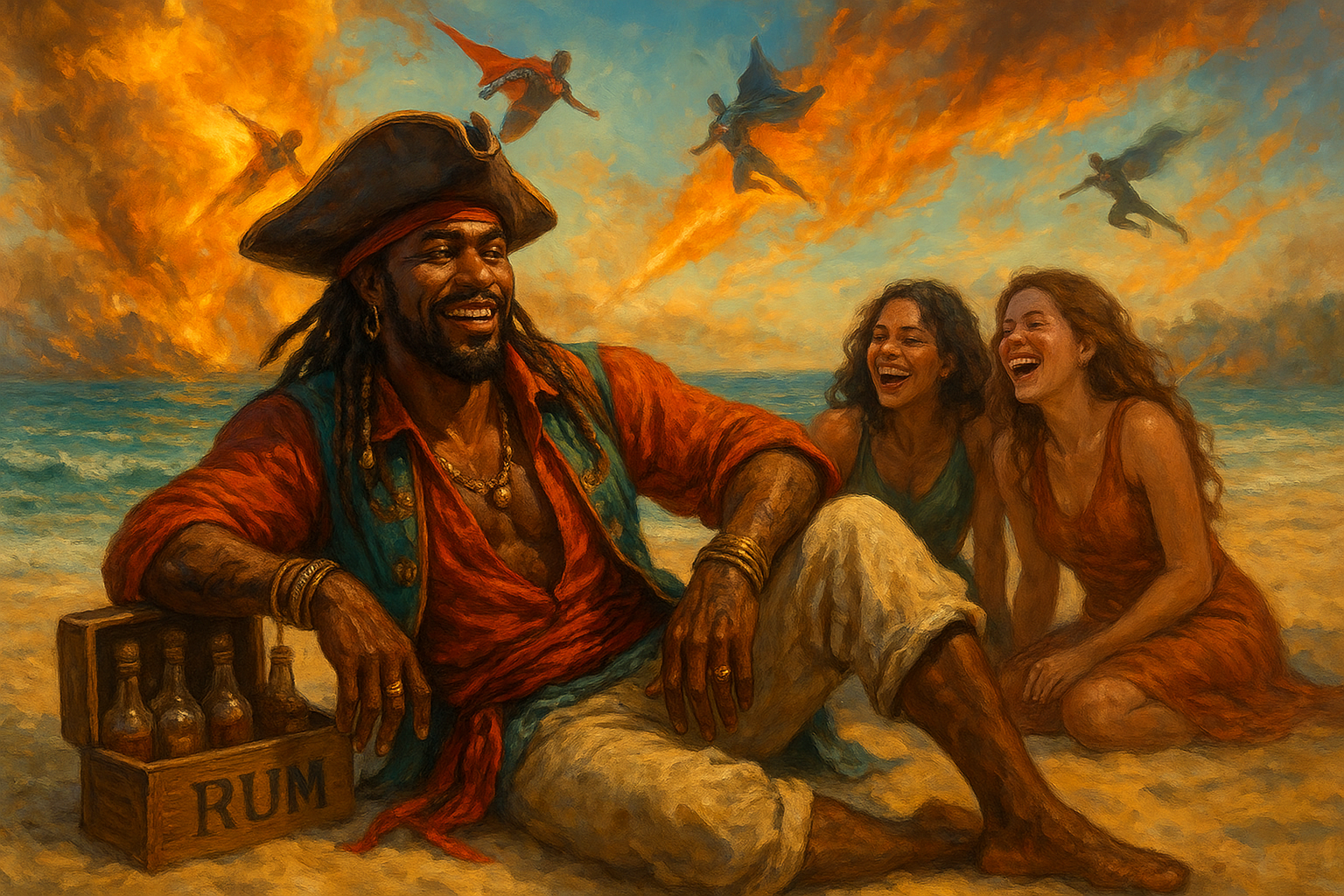
So while they’re still out here waiting for Superman, I’m already on my beach chair…Sean Carter Jack Sparrow style…rum dripping from the glass, laughter spilling over the waves, the whole scene moving like a song only I know the beat to. That’s my economy: pleasure and profit moving in rhythm, carrying me forward without end.
The ship sailed. Still mine. All mine. 🏴☠️🏁
The Gift of More Time: Embracing Presence in an Era of Longer Lives
Humanity stands at the cusp of a remarkable transformation. Imagine a future with less disease, fewer conflicts, and greater intelligence…a future where the boundaries of lifespan expand significantly. This isn’t just science fiction; it’s a potential reality on the horizon. But with this extraordinary gift of more time comes a profound need for a fundamental shift in how we experience it. We must move beyond our rigid social constructs of time and embrace the power of present-moment awareness to truly live these extended lives to their fullest.
For so long, our lives have been dictated by the relentless march of the clock…a social agreement that helps us navigate our shared reality. We’ve been tethered to the past through memory and pulled into the future by ambition and worry. But what happens when “more time” isn’t just a little extra, but a significant expansion of our earthly journey? Simply stretching our existing, often distracted, way of living over a longer duration risks amplifying our anxieties and regrets.
The key lies in mindfulness: the simple yet profound practice of being fully aware of the present moment, without judgment. Mindfulness isn’t about fixing something broken within us; it’s about cultivating a state of being that enriches every single moment we are alive.
Think about it. If you have decades more to live, do you want to spend them replaying past mistakes or fretting about an uncertain future? Or do you want to savor the taste of your morning coffee with complete attention, connect deeply with loved ones in unhurried presence, and find joy in the everyday miracles that often go unnoticed?
Mindfulness offers us the tools to do just that. It allows us to:
Retire our busy brains: Gently release the constant chatter of thoughts about what was or what might be, freeing up mental space to fully engage with what is.
Become one with the universe: By anchoring ourselves in the present, we align with the continuous flow of existence, transcending the limitations of self-imposed timelines.
Live fully: Being present allows us to experience life with greater intensity, appreciate its nuances, and extract richness from every interaction and sensation.
Cultivate awareness: Mindfulness trains us to notice the beauty and wonder that surrounds us, often hidden in plain sight when our minds are elsewhere.
Be non-judgmental: We learn to accept our experiences—pleasant or unpleasant—without resistance, fostering inner peace.
Regulate emotions: By observing feelings as they arise, without getting carried away, we gain greater control over our reactions and cultivate emotional resilience.
Rewire our brains: Consistent mindfulness practice strengthens neural pathways associated with positive emotions and present-moment focus, making these states more readily accessible over time.
In a future brimming with possibility and extended years, our relationship with time must evolve. We need to shift our focus from merely counting the moments to truly making each moment count. Mindfulness is not just a trendy concept; it’s a fundamental skill that will enable us to navigate this new era with wisdom, joy, and a profound appreciation for the extraordinary gift of a longer, more present life.
Copyright © 2025 Jameel Gordon - All Rights Reserved.
10 Lessons From The Grand Architect:
What started with a book and an idea has grown into a powerful body of work—global in reach, unapologetically independent, and deeply personal in origin.
But beyond the metrics and milestones, there’s something far more valuable: the lessons learned as The Grand Architect. Lessons about power, resistance, value, vision, and the cost of building when no one else sees what you see.
Here are 10 lessons from a journey that’s still unfolding—but already reshaping the narrative of human evolution:
Vision Doesn’t Require Permission
This didn’t begin with a strategy deck or a seed round. It started in a library with a moment of curiosity, clarity, and conviction. That’s a reminder that you don’t need an audience to start. You just need a vision.
Vision Creating From Nothing Is a Radical Act
To build something real with no blueprint, no institutional blessing, and no safety net is an act of defiance in a world designed to keep power centralized. This work began in silence but it didn’t stay there.
Resistance Is a Confirmation, Not a Deterrent
Doubt came from all directions—friends, political actors, religious institutions. But that opposition was a signal. If your work makes people uncomfortable, you’re likely building something transformative.
Impact Doesn’t Need Validation
Over $1.3 trillion in economic development has been shaped by this work—and yet the credit hasn’t been public. That’s the game. Your value isn’t measured by visibility—it’s measured by the ripple effects your work creates.
Ownership Is Everything
In an era where everyone wants a piece of your genius, keeping ownership isn’t just strategic—it’s survival. No weak alliances. No watered-down vision. Because what you own, you control. What you give away too early, you lose forever.
The Storm Will Come—Build Anyway
The storms were real. Unimaginable. But the work continued. Resilience isn’t just emotional strength—it’s discipline in motion. It’s building while bleeding.
Do Not Work for Free If You’re Truly Free
You were told to give it away. To prove your worth. But your refusal is a rejection of extraction disguised as opportunity. Brilliance doesn’t owe anyone unpaid labor.
Self-Love Is the Most Radical Reclamation
When the world tried to diminish you, you chose to love yourself instead. That’s not ego—it’s protection. Choosing yourself is revolutionary in systems designed to erase you.
Build In Real Time By Your Own Hard Work
There’s a rhythm.
You Don’t Owe the World Your Whole Story
Some details stay sacred. And that’s the final lesson: You can be public without being exposed. You can lead without explaining. And mystery is part of mastery.
A Bonus Lesson: The Blueprint Is Yours
This work isn’t just unprecedented—it’s unclaimed territory. And while others may try to rewrite the narrative of AI, innovation, or success—you’re already living it.
Another Bonus Lesson: Start from nothing. Build everything.
I think this is self explanatory. Go serve yourselves!
Copyright © 2025 Jameel Gordon - All Rights Reserved.
I’m Not the Problem — I’m the Prime Target

When you’re building something original, disruptive, or paradigm-shifting, you may start to notice a pattern: pushback, isolation, obstruction, or even outright sabotage. It’s easy to internalize that resistance as failure or personal shortcoming but what if you’re not the problem? What if you’re the prime target?
That’s the insight that was shared with me recently: “When you’re the world’s greatest mind, it makes you not only the prime recruit, but the prime target amongst the powers that be.”
And if you’re fiercely independent, refusing to align with any single agenda, your very autonomy becomes a threat. Power structures thrive on allegiance, predictability, and control. Independence isn’t just rebellious, it’s revolutionary.
The Entrepreneur’s Burden
As an entrepreneur, especially one who dares to think differently, you carry more than the weight of your ideas. You carry the burden of being misunderstood, underestimated, or quietly opposed. The resistance you face might not be because you’re doing something wrong, but because you’re doing something right, something disruptive, something the old system can’t quite absorb or co-opt.
You’re not being attacked because you’re independent. You’re being targeted because you’re independent.
Opposition Is Often Confirmation
In the early stages of building, when things are messy and unclear, any pushback can feel like a reason to stop. But I want you to consider this:
• Your clarity unsettles the status quo.
• Your innovation disrupts deeply entrenched systems.
• Your independence threatens those who depend on compliance.
If you’re being blocked, questioned, doubted, or watched — that’s a sign you’re moving energy. You’re not invisible. And that matters.
You Don’t Have to Join to Lead
I’ve learned the hard way that being “on your own” doesn’t mean you’re alone — it means you’re free. When you’re not beholden to any singular power or institution, you have the space to create without compromise. But that independence also means you won’t be easily accepted — because you’re not controllable.
And that’s OK. You don’t have to be absorbed to be successful. You don’t have to be sponsored to be significant. You don’t have to be understood to be unstoppable.
Some Guidance for the Path Ahead:
Don’t shrink to fit. If you’re constantly minimizing your gifts to make others comfortable, you’re robbing the world of the impact you were born to make.
Stay clear, not bitter. Opposition can harden you if you let it. Instead, let it clarify your mission and deepen your resolve.
Guard your energy. Not everyone is meant to walk with you. Learn to discern between constructive critique and covert control.
Own your role. You’re not the underdog. You’re not the outlier. You are the origin point— and that power requires fierce protection.
Keep building. No matter how many try to discredit, delay, or divert you — your work will speak. Let your outcomes be your retaliation.
Final Word
If you’re feeling weighed down by opposition, remember: it’s not always personal. Sometimes, it’s strategic. You’re not the problem — you’re the prime target. And that’s not something to fear. That’s something to honor.
So stay rooted. Stay focused. And above all, stay free.
Copyright © 2025 Jameel Gordon - All Rights Reserved.
Why Being “The Problem” Is Exactly What the World Needs

Here’s some of the feedback I’ve been getting lately:
“You’re so extra.”
“Why do you have to be so different?”
“You’re trying to disrupt the entire healthcare industry, and you have no experience or knowledge in that—so why are you even trying?”
“You’re a one-man team.”
“People are afraid of you. Not afraid, but afraid of you.”
“This is Buffalo. They want to keep the city a secret, and here you come with all these big ideas, causing problems for the powers that be.”
I think I am the problem. And you know what? I’m perfectly okay with that.
If you’re an entrepreneur, especially one who dares to challenge the status quo, you’ve probably heard some variation of these phrases. People will question your motives, your expertise, and your ability to pull off something that hasn’t been done before. But here’s the truth: innovation isn’t about waiting for permission. It’s about breaking barriers, challenging outdated systems, and proving that just because something has “always been this way” doesn’t mean it has to stay that way.
The World Doesn’t Change with Conformity
Disruptors make people uncomfortable. That’s the price of vision. When you think differently, when you push beyond conventional limitations, you will encounter resistance. Not because you’re wrong, but because people fear change. And more importantly, they fear the power of someone who isn’t bound by the same fears they are.
Every industry has gatekeepers, people who believe they get to decide who belongs and who doesn’t. But here’s the reality: the greatest innovators in history weren’t “qualified” by traditional standards. Steve Jobs wasn’t an engineer. Oprah didn’t have a journalism degree. Elon Musk didn’t start as a car manufacturer. What they did have was relentless belief in their vision and an unshakable commitment to making it real.
So when someone tells you that you’re “too much,” hear it as confirmation that you’re doing something right. If people say you’re “the problem,” maybe the real issue is that they’ve gotten too comfortable with problems that shouldn’t exist in the first place.
Building Without Approval
The truth is, you don’t need a whole team to start. You don’t need unanimous support. You don’t need every door to be open. What you do need is resilience. Some of the best businesses, innovations, and movements started with a single person refusing to accept “no” as the final answer.
Buffalo, like many places, has a culture that thrives on its own traditions. But that doesn’t mean those traditions should dictate your future. Whether you’re in tech, healthcare, sustainability, or any other industry, if you see a way to make things better, go for it. The powers that be might not like it, but movements aren’t built to please, they’re built to change.
Keep Being “The Problem”
If your ideas make people uncomfortable, keep going. If your ambition challenges the status quo, keep pushing. If your success forces others to rethink what’s possible, keep winning.
The world needs people who dare to be different. The world needs disruptors. The world needs you.
So be relentless. Be unstoppable. And above all, be the problem they never saw coming.
Copyright © 2025 Jameel Gordon - All Rights Reserved.
The Double-Edged Sword of Real Estate Investment

When I talk to people these days about investing in the future, I often get shrugged off—especially by a new generation of investors who have recently become financially literate. Many insist that they will only invest in real estate because they view it as owning tangible property rather than putting money into what they see as a shiny, intangible tech company. This perspective is particularly common among those who approach investing through a social justice lens, aiming to close the wealth gap across genders and races.
By many standards, I agree with this mindset. However, the reality is more complicated. Real estate can be a risky investment, particularly for those who lack the knowledge or resources to manage it effectively—especially when scaling such investments. It’s a high-stakes game, something I learned firsthand while studying real estate history and working as a real estate agent and broker. The consequences of poor decision-making, bad judgment, bad timing, and greed are evident in past housing crises—and, inevitably, in future ones, as financial instruments continue to grow more complex.
Additionally, while I can’t speak for every municipality, I’ve examined several closely and found that many so-called “properties” being purchased are actually financial instruments rather than true real estate. Many buyers assume they are purchasing land when, in reality, they are only acquiring the housing structure that sits on it—whether a house, building, co-op, or condo. If you don’t own the land itself, from my perspective, you don’t own much. You own the structure and possibly its associated lot, but not the actual land beneath it.
So yes, I agree that real estate is one of the safest and most reliable investment vehicles for building wealth. But it’s also one of the greatest tools of injustice in human history. Entire communities have been erased for the very land we now seek to own for our personal and generational wealth. Think about that.
Copyright © 2025 Jameel Gordon - All Rights Reserved.