
Our Evolving Foundational Narrative
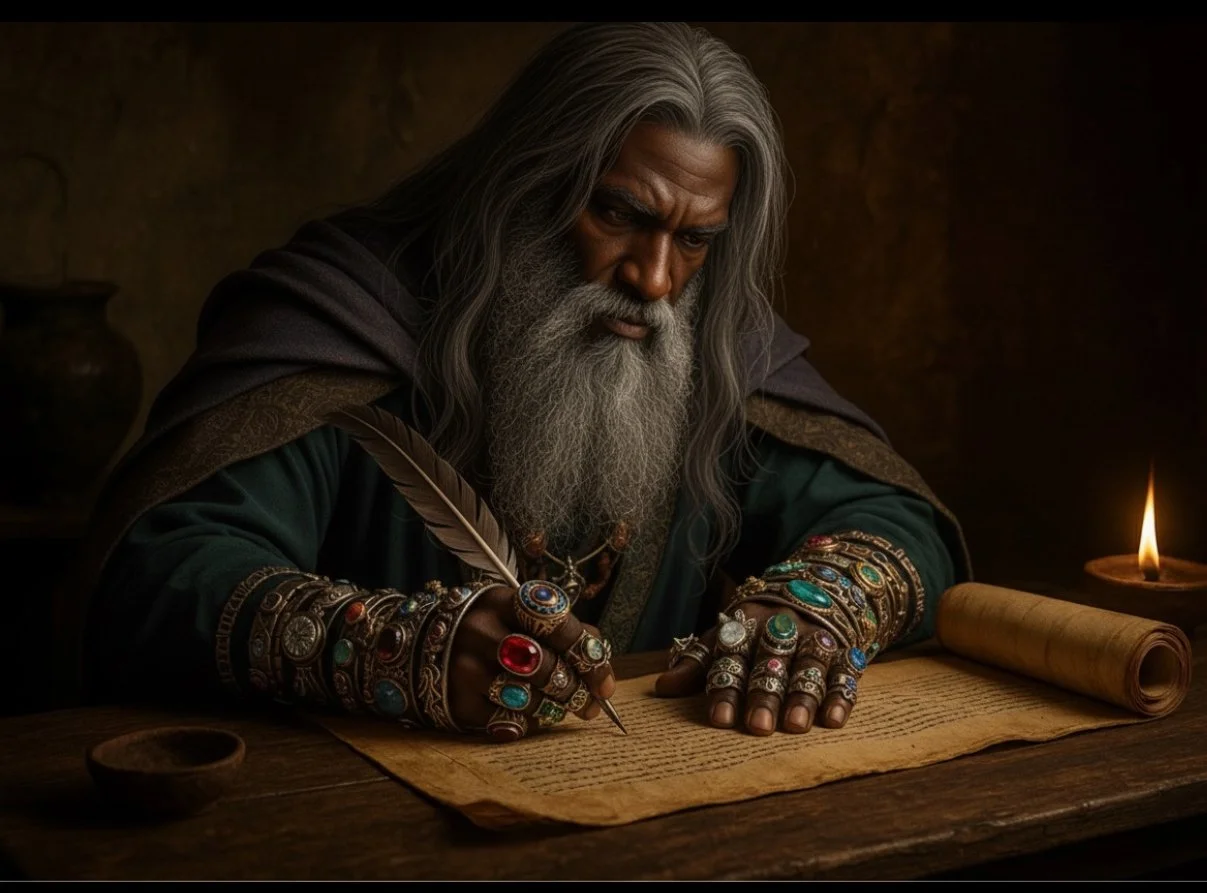
When we talk about “world history,” we often imagine a comprehensive record of human events, a factual map of civilization’s triumphs and failures. We picture dates, battles, rulers, discoveries and an orderly narrative of what actually happened. Yet, the reality is far more complicated. Much of what we consider history, especially from the distant past, is built on fragmentary, circumstantial, or secondary sources. By the strict definition of history as the study of past events supported by verifiable evidence these accounts often cannot be classified as definitive history. They are better understood as storytelling, cultural narrative, or myth, reconstructed from the traces left by those who lived or remembered the events. As the saying goes, “History is made by those who live to tell the tale”.
Our knowledge of ancient civilizations, for example, relies heavily on written accounts produced decades or even centuries after events, supplemented by archaeological evidence that often requires interpretation. Oral traditions, which preserve stories across generations, are invaluable for understanding cultural perspectives, but they are inherently selective and shaped by memory, politics, and social context. Even material evidence such as artifacts, ruins, or inscriptions does not speak for itself; historians must interpret it, connecting fragments into coherent narratives. The farther back we go, the greater the reliance on interpretation rather than direct observation, meaning much of what we call history is already a version of a story, polished over time.
Over centuries, events move from memory into myth. Heroes and villains become larger than life, motivations are inferred or projected, and facts are blended with legend. What survives as “history” is often what communities have agreed to preserve and retell, shaped by cultural, political, and social forces. This doesn’t make it worthless. These narratives offer insight into how societies understand themselves, but it does mean we must approach history critically, aware that certainty diminishes with time.
Ultimately, history is both evidence and narrative. It is grounded in documents, artifacts, and analyses, yet it is also inseparable from interpretation and storytelling. The paradox is that while history seeks truth, much of what we inherit is already filtered through layers of memory, myth, and reconstruction. Recognizing this does not undermine history; it deepens our understanding of it. The study of the past is not just about cataloging facts it is about questioning the stories we inherit, examining the evidence, and understanding the human impulse to make sense of time through narrative.
Copyright © 2025 Jameel Gordon - All Rights Reserved.
The Future of Writing, Thinking, and Saying What We’re Not Supposed To

This blog post might end up covering more than two topics at once or maybe it’ll turn out to be just one.
Lately, a lot of people have been advising me to stop saying things out loud. The implication is that what I’m saying, writing, and sharing on social media isn’t unique; it’s actually quite common. The only difference is that I’m willing to say these things out loud, while most people keep them to themselves, quietly navigating their lives, getting what they need, and “playing the game.”
Anyone who really knows me especially at this stage of my life understands that I’ve always been a little disruptive. Not disruptive for the sake of being rebellious, but because questioning things and speaking out loud is simply part of who I am. I’ve always spoken my mind, but not always. For a long time, I was good at remaining silent and keeping my thoughts to myself. And what did that get me? Not a damn thing. I’m far more impactful and make more progress by saying and doing the things in my head, rather than filtering them through society’s and politics’ endless “acceptable” filters.
So what does this have to do with what I think is worth sharing here? Well, the future is going to be fascinating as artificial intelligence becomes embedded in so many of our devices, forming an undercurrent of our daily lives. It makes me wonder: will humans continue to write in the way we always have? Will we still collect our thoughts on paper or in books to reflect and share them, or will we communicate almost exclusively with AI?
The simple answer is that we’ll be sharing with AI far more ubiquitously. But what does that mean for the human skill of writing? Will we ever “write” again or what will we even consider “writing” if so much of it is dictated to a machine? For example, this post itself was typed on a standard QWERTY keyboard and then processed through an AI system for editing.
But if I hadn’t used a keyboard, if I’d just dictated it as voice notes, would that still count as writing? And if I’m questioning that, I have to ask: is what we’re doing with AI actually “thinking,” or is it something else entirely? To me, it’s obviously not the same. The future of writing, thinking, and passing on knowledge takes on a whole new meaning when everything is filtered and processed through artificial intelligence.
And yes…I’m going to keep speaking out loud. Society and politicians will just have to get used to hearing my views. Sorry…for WHUTEVER!
Copyright © 2025 Jameel Gordon - All Rights Reserved.
Watch For The Fine Print
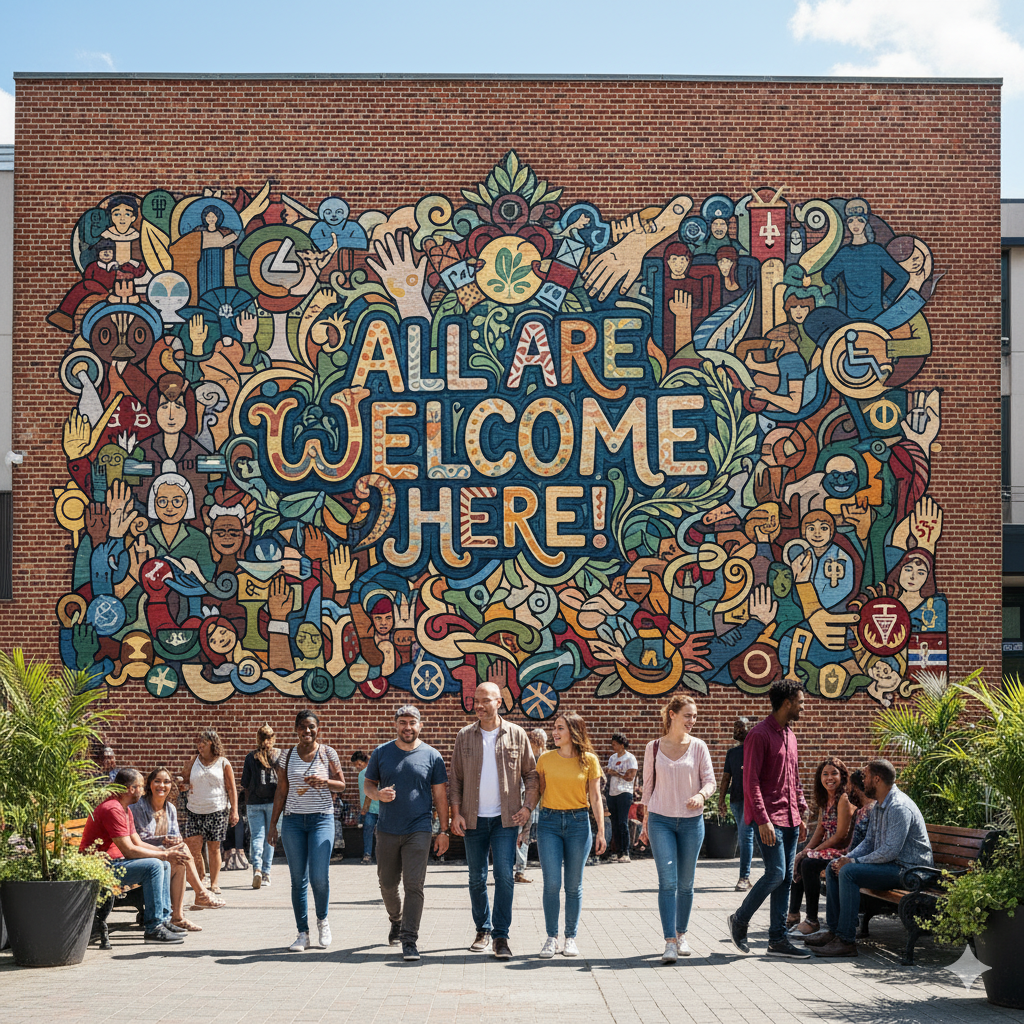
I passed these signs all the time…big bold letters, screaming “ALL are welcome here.” And every time I see something like this, I pause. Not because it inspires me, but because I’ve learned to be skeptical of the need to project something that, if it were real, wouldn’t need to be advertised.
You see, inclusion isn’t supposed to be a campaign. It isn’t supposed to be a curated list of buzzwords to make people feel good about themselves. It’s supposed to be the air you breathe, the soil you plant in, the rhythm you move by. It’s supposed to be so ingrained in your philosophy, your mindset, your practices, that no sign needs to announce it.
But I’ve lived enough, and I’ve done enough work, to know better. I’ve seen how quickly those same people who parade inclusion will turn around and other you when you don’t fit neatly into their expectations.
I’ve been Black long enough to know what that looks like. And yet, when I refused to be boxed into the groupthink of Black Lives Matter, when I dared to think independently, they tried to strip away the very identity they claimed to protect. They have circled my work, my voice, my freedom, as if my refusal to conform somehow made me less Black. That’s the profoundly unthinkable part: how quickly inclusion becomes exclusion when you don’t fit the mold.
And it’s not just politics or movements. I’ve seen Christians who preach love, peace, and kindness turn their faith into organized madness. I’ve seen them mobilize armies of “saviors” against me because of witches, demons, and every ghostly enemy they can conjure, while ignoring the contradictions in their own sky-high promises. What’s more offensive to them isn’t that I walked away it’s that I walked away unapologetically. It’s that I didn’t ask for their redemption. To them, my rejection of their system is worse than any sin. And the love, peace, and kindness they boast about? That vanishes. I’m no longer a neighbor, I’m an enemy. But if I surrender, if I bend, if I turn my life back over to their beliefs, suddenly I’m “redeemed.” That isn’t unconditional love that’s coercion. That’s spiritual barbarism dressed up as salvation.
And then there’s politics. The left, the right—they’ll go to war against each other every election cycle, swearing the system is broken, swearing their leaders are corrupt. But step outside of their binary, exercise your freedom in a way they don’t approve of and suddenly they’re united. Suddenly, their nationalism has room for everyone except the free Black man who won’t play by their script. That’s when the constitution they claim to love becomes strangely negotiable.
I’ve seen it everywhere. The same contradiction, over and over. And the truth is I could keep listing examples, because I’ve lived them. I’ve been invited into spaces only to be pushed back out when my freedom spoke louder than their comfort. I’ve been othered by people who say “all are welcome.”
But here’s where it shifts for me. In all of this, I’ve realized something: I’ve become a unifying force. Not because I’m trying to be, but because freedom has a way of pulling people in even people who don’t agree with me, even people who don’t like me. My work, my voice, my way of living free it draws in people from every walk of life, and in that strange, uncomfortable collision, something powerful happens. They’re confronted with freedom, and whether they like it or not, they have to decide where they stand.
And so I’ve made my choice. I will keep living free. I will keep living in my freedom. I will keep speaking, writing, creating, not just to claim my own space, but to free others to do the same. Because that’s the essence of it all: you live free, or you don’t live at all.
And if living free long enough means I become the villain in somebody else’s story, I’ll wear that. Because my life and my freedom are worth the cost. Every single time.
Copyright © 2025 Jameel Gordon - All Rights Reserved.
The Soft Life Starts Here

My work has been impactful in ways most people can only imagine. I invented tools like artificial intelligence that is transforming human evolution for the better. I’ve generated trillions in economic development. I’ve built a global network tackling climate change, and I’ve created new frameworks for the United Nations Sustainable Development Goals that make the impossible achievable. Lifetimes worth of work.
And yet, so many ask me what I do, so many want to guide me, and so many are demanding even more of me. But I’m done working.
The world will not have access to me and my work anymore. Not because I don’t care, but because I do. I am choosing focus, intention, and a different rhythm to life.
Why exclusivity? Why the soft life? Because over the past three years, I mastered strategies most don’t even know exist. I earned success, but now I deserve peace. My soft life calls: mountain mornings, quiet beach cafés, winding vineyards, the freedom to create without noise, compromise, distraction, or hustle.
And here’s the real opportunity: I will only be available to a very small, carefully curated group of people at a time. People ready to build the future with me, to create a world that’s equitable and sustainable for everyone.
With this all in mind, I am building my core team and a global cohort who will be prepared and deployed for the lack of better words. Together, with the networks, resources, and the frameworks we will build the world we want to see. This is not a business as usual. I don’t even want to call it a movement.
I don’t do desks. I don’t do laptops. I don’t do systems that limit imagination. I do flow, freedom, and results. I do creativity that regenerates ecosystems and human potential. I do the hard work of building lives that are soft, and unstoppable.
If you are ready to step into a space where the world’s rules no longer apply, where your ambition meets purpose, and where together we design the future…reach out. Join us quietly, deliberately, powerfully.
Because the truth is: the future belongs to those who are willing to step away from the noise, embrace the soft life, and build the world we were meant to live in.
Welcome to the sustainable future.
Copyright © 2025 Jameel Gordon - All Rights Reserved.
When Criticism Misses the Point

The crux of the criticism I recently received was simple: my content gives “toxic male gaze vibes.” Now, a basic review of my profiles and content should suggest to anyone that I genuinely don’t care about performing for approval. In other words: IDGAF.
But I do care about the conversation, and I do care about the deeper questions beneath the criticism.
Yes, my past strategy was bold, provocative, and even “cringe” by corporate standards. It was designed that way because drama draws attention, and attention creates momentum. Those of you who have been following me from the beginning, you know my strategy was based on the wild findings in the research published by all the dating apps. That strategy worked. My network grew, doors opened, and people who resonated with my work found me.
Now I’m shifting. I’m focused less on pure attention and more on value, depth, and freedom. My voice cannot be canceled, precisely because it refuses to hide behind a facade.
And here’s the heart of it:
I’m unapologetically in my masculine and feminine. That doesn’t mean “toxic.” That doesn’t mean “demeaning.” It means I express myself openly, directly, and yes, sometimes with imagery and words that make people uncomfortable.
The discomfort is the point. Behind closed doors, society indulges in everything it condemns in public. We hide behind fig leaves, while pretending that repression equals morality. It doesn’t.
The truth is, my engagement happens mostly in private messages. Why? Because people have reputations to maintain, even when my content resonates with them deeply. Publicly, they distance themselves; privately, they engage. That says more about our culture than it does about me.
To those who find my approach offensive: I hear you. I don’t expect to change your mind. But I also won’t betray my voice to conform.
Because we will not achieve true equality—social, gendered, or otherwise—if we don’t stop hiding behind these silly fig leaves.
Copyright © 2025 Jameel Gordon - All Rights Reserved.
The Future of Work: Why I Don’t Own a Desk or a Laptop

I don’t own a desk. I don’t own a laptop. And yet, I am more productive, more creative, and more aligned with my work.
For most professionals, a desk and a laptop are the cornerstones of productivity… symbols of belonging in the modern workplace. But what happens when those symbols no longer serve us?
The future of work isn’t about physical infrastructure. It’s about flexibility, agility, and designing around human potential rather than rigid systems. Today, work happens anywhere and everywhere: on a walk, through a quick voice note, in real-time collaboration across devices that aren’t “mine,” but ours.
By letting go of the desk and laptop, I’ve let go of the illusion that productivity must be tethered to fixed tools. Instead, I’ve embraced outcomes over appearances. No one should care if I typed a strategy at a desk, dictated it in transit, or co-created it across the cloud. What matters is the quality of the work and the impact it creates.
This is the trajectory we’re on: a work culture where space is optional, tools are interchangeable, and people are empowered to lead with creativity and purpose. The desk doesn’t define us. The laptop doesn’t contain us. The future belongs to those who can move with freedom, focus, and adaptability.
I don’t own a desk or a laptop. And I am more ready for what’s next.
Copyright © 2025 Jameel Gordon - All Rights Reserved.
Why I Don’t Work for the U.S. Government.

I am a sovereign individual. I do not work for the United States government. I am not beholden to their national security interests, their state agencies, or local authorities. My allegiance is not to political mandates or public oversight it is to myself, my family, my friends, and the enterprises we cultivate together all around the world.
For the last three plus years, I pursued work in public policy and civic initiatives with the intention of “doing good.” I sought to “serve”, to influence, and to create impact for as many as possible. But good intentions met with resistance, misalignment, and obstruction. Efforts meant to benefit communities or advance meaningful causes were delayed, redirected, blocked, and filled with corruption. And the expectation that my work should serve American government agendas—particularly their national security interests—is intrusive, constraining, and incompatible with personal freedom and the wellbeing of the general public.
That realization was pivotal. I now choose to operate entirely outside those systems. I pivot decisively toward the global private sector, toward ventures that safeguard the well-being, security, and prosperity of myself, my family, my friends, and our extended circles all around the world. This is not a retreat from responsibility—it is the most responsible path available. True freedom, true independence, and lasting impact demand autonomy, foresight, and execution unbound by external obligations.
To those who have followed my earlier work, I acknowledge your expectations and intentions and I am sorry…for WHUTEVER. My shift is not a rejection of moral purpose, but a recalibration of strategy. The time for cautious compromise has passed. Difficult decisions must be made now to ensure the independence, security, and sovereignty of those I care about most. Acting decisively and wisely is no longer optional it is imperative.
This approach is rooted in principle. My lifelong and generational familial relationships from around the world has long taught me the importance of discipline, ethical stewardship, and mastery of self before seeking influence over others. Applying these lessons in this modern world means creating structures, enterprises, and strategies in a modern way that protect those closest to me, cultivate wealth responsibly, and secure independence. Private endeavors are not secondary—they are the primary vehicle through which our sovereignty is realized.
My enterprises will remain private, deliberate, and purposeful. They are designed to generate security, preserve freedom, and ensure the prosperity of my circles. I will not allow external pressures, government mandates, or the demands of the general public to compromise this mission. Every decision, every initiative, every step forward is guided by this principle: sovereignty, autonomy, and the protection of my friends, my family, and our business partners.
Let this be unequivocal: my path is not public service dictated by external authority. It is a sovereign pursuit, deliberate and strategic, designed to ensure that I—and those I value—thrive independently, securely, and sustainably. This is the time to act boldly, decisively, and with unwavering commitment to autonomy, principle, and foresight. The future of freedom and prosperity is forged through deliberate choices, and these deliberate choices continue with the decision to prioritize private stewardship over public policy work. Good luck!
This is the future. I am…building. 🏁
Copyright © 2025 Jameel Gordon - All Rights Reserved.
Beyond Religion and Government: Reimagining Society for True Inclusion

Throughout history, humanity has attempted to build peaceful and cohesive communities through traditional and systematic methods and approaches such as religion, government, and the even more vague and elusive “shared values”. And yet, the results speak for themselves: inequality, conflict, power struggles, and persistent divisions.
Take religion for example. If religion’s centuries-long project of systemizing morality and “shared values” can’t create genuine peace, why should we continue to expect their current systems of belief, as well as our structures of politics, economics, or labor divisions to succeed where they too have consistently failed? All these attempts have miserably failed for thousands and hundreds of years and yet we persist as if they are capable of achieving their suggested outcomes.
At best we are often convinced that we should continue to thrive towards idealistic pies in the sky and when we come to grips with the reality of their oppressive and delusional nature we are then convinced to have hope. WTF is wrong with us?
As someone who was systematically trained within these institutions, I can say with certainty that they are unnecessary in society and, in fact, are the root of our divisions, conflicts, and the very obstacles preventing a more cohesive and equitable way of life for humanity.
The uncomfortable truth is this: religion and government have proven themselves inadequate as foundations for an inclusive, equitable society. They are riddled with power dynamics, hierarchical control, and embedded inequalities. Instead of solving our conflicts, they have often deepened them.
Why the Old Models Don’t Work
1. Power and Hierarchy Are Built In
Religions and governments alike depend on authority structures—priests, popes, presidents, monarchs, CEOs. These hierarchies inevitably create imbalances that lead to domination, corruption, and exclusion.
2. Shared Values Aren’t Enough
The idea that we can unite around shared values is appealing but flawed. “Shared values” almost always apply only within a group, and those outside the circle become “other.” Religion especially has drawn sharp boundaries between insiders and outsiders, fueling persecution and war rather than cohesion.
3. The Division of Labor Breeds Conflict
Our economic and political systems thrive on specialization, but specialization also creates dependencies, competition, and power dynamics. As long as resources are scarce and roles unequal, conflict will follow.
A Deeper Problem: Structure, Not Individuals
Sociologists remind us that conflict and inequality don’t arise because individuals are inherently greedy or immoral. The problem lies in the structures—the systems of labor, distribution, and decision-making that guarantee some groups hold more power and resources than others. Institutions like religion, law, and education are not neutral; they often reinforce these inequalities.
Trying to “re-educate” individuals without changing the structures is like trying to fix a faulty engine by telling the parts to behave differently. The design itself has to change.
Toward a Re-Socialization of Humanity
If we are serious about moving beyond centuries of failure, we need more than tweaks to existing systems. We need a re-socialization of humanity…a radical rethinking of how we live, cooperate, and resolve conflict. Religion, despite its vast historical reach, has not achieved this…not even close. At best, it tells us it cannot be achieved, urging us instead to place our hope and faith in the unknown and unseen. That in itself should tell us something. Or, as religious leaders like to remind us, it’s time to have faith the size of a mustard seed.
What might this look like?
Decentralized Power: Structures that prevent any one group from controlling the levers of wealth, culture, or governance.
Resource Equity: Systems designed to ensure equitable access to resources, not just theoretical equality.
New Forms of Belonging: Communities formed around interdependence and shared humanity, not exclusionary “values” that divide and no one actually agrees on particularly as it relates to the more elusive frameworks of morality.
Conflict as Transformation: Instead of suppressing conflict, designing systems that channel it into growth and innovation.
Who’s With Me?😒
The task is daunting. It means questioning the very assumptions we’ve inherited about religion, government, labor, and morality. It means daring to admit that our “great experiments” have failed—and that failure is not just a flaw but a fact. It means paying for questioning and challenging the status quo even in a “free society” and a “free society”!
But it also means opportunity. To build societies that are inclusive, equitable, and truly peaceful, we must reimagine from the ground up. We must step beyond the outdated systems and dare to design something new and we must do so together.
Who’s ready to start? I already did…
Copyright © 2025 Jameel Gordon - All Rights Reserved.